


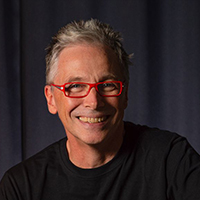
Peter Corke is an internationally recognised researcher and pioneer in robotics, computer vision, and autonomous systems. He is a Distinguished Emeritus Professor of Robotics at the Queensland University of Technology (QUT). Over a four-decade career spanning field robotics for mining, agriculture, and environmental monitoring, he has led foundational research in embodied intelligence and developed widely adopted open-source robotics software and educational resources worldwide. He is a highly cited author; a Fellow of the IEEE, the Australian Academy of Science, and the Australian Academy of Technology and Engineering (ATSE); a former Editor-in-Chief of the IEEE Robotics and Automation Magazine; and a recipient of the Australian Award for University Teaching (AAUT) and the Joseph F. Engelberger Robotics Award.
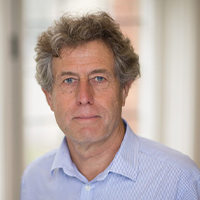
Professor Tim Palmer CBE FRS is a Royal Society Research Professor Emeritus in the Department of Physics at the University of Oxford. His PhD was from the University in Oxford in general relativity theory. Since then he has specialised on the dynamics and predictability of weather and climate. His research contributions range from the discovery of breaking Rossby waves in the stratosphere to the study of causes of long-term drought in the African Sahel. Operationally he pioneered the development of the first ensemble prediction system for probabilistic weather and climate prediction, at the UK Met Office and at ECMWF. Palmer is a Fellow of the Royal Society and an International Member of the US National Academy of Sciences. He has won the top prizes of the American and European Meteorological Societies and of the UN World Meteorological Organisation.
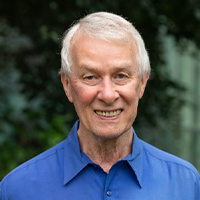
Dr. Richard J. Roberts is the Chief Scientific Officer at New England Biolabs, Ipswich, Massachusetts. He received a Ph.D. in Organic Chemistry in 1968 from Sheffield University and then moved as a postdoctoral fellow to Harvard. From 1972 to 1992, he worked at Cold Spring Harbor Laboratory, eventually becoming Assistant Director for Research under Dr. J.D. Watson. He began work on the newly discovered Type II restriction enzymes in 1972 and these enzymes have been a major research theme. Studies of transcription in Adenovirus-2 led to the discovery of split genes and mRNA splicing in 1977, for which he received the Nobel Prize in Medicine in 1993. During the sequencing of the Adenovirus-2 genome, computational tools became essential and his laboratory pioneered the application of computers in this area. DNA methyltransferases, as components of restriction- modification systems are also of active interest and the first crystal structures for the HhaI methyltransferase led to the discovery of base flipping. Bioinformatic studies of microbial genomes to find new restriction systems are a major research focus as is the elucidation of DNA methyltransferase recognition sequences using SMRT sequencing. He frequently runs campaigns among Nobel Laureates to support humanitarian causes including strong support for GMOs to solve world hunger.
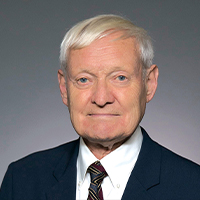
Born in 1940 in Germany, Joachim Frank is a biophysicist considered the founder of single-particle cryo-electron microscopy (cryo-EM), a technique now widely used to determine the structure of biological molecules. He studied physics at the University of Freiburg in 1963 and received the doctorate from the Technical University of Munich in 1970, for a dissertation in the laboratory of Walter Hoppe at the Max Planck Institute for Biochemistry focusing on image processing of electron micrographs. After postdoctoral studies in the USA and the Cavendish Laboratory in Cambridge, he joined the Wadsworth Center in Albany, New York in 1975 as a senior research scientist. In 1985 he became part of the founding faculty for the department of biomedical sciences of the University at Albany. He has been recognized with numerous awards and accolades for his development of the mathematical and computational foundations of cryo-EM and the application of this technique to the study of ribosome structure and function. In 1998 he was named a Howard Hughes Medical Institute (HHMI) Investigator. In 2003 he received an appointment by Columbia University as lecturer and since 2008 he is professor of biochemistry and molecular biophysics and of biological sciences. In 2017, he was awarded the Nobel Prize in Chemistry along with Richard Henderson and Jacques Dubochet for "developing cryo-electron microscopy for high-resolution structural determination of biomolecules in solutions”.
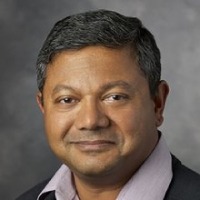
Dr. Arun Majumdar is the inaugural Dean of the Stanford Doerr School of Sustainability. He is the Jay Precourt Provostial Chair Professor at Stanford University, a faculty member of the Departments of Mechanical Engineering and Energy Science and Engineering, a Senior Fellow and former Director of the Precourt Institute for Energy and Senior Fellow of the Woods Institute for the Environment and Senior Fellow by (courtesy) of the Hoover Institution. He is also a faculty in Department of Photon Science at SLAC. In October 2009, Dr. Majumdar was nominated by President Obama and confirmed by the Senate to become the Founding Director of the Advanced Research Projects Agency - Energy (ARPA-E), where he served until June 2012 and helped ARPA-E become a model of excellence and innovation for the government with bipartisan support from Congress and other stakeholders.
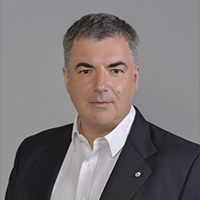
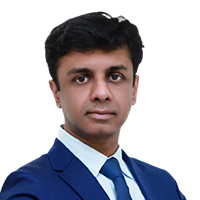
Founder and CEO, LOHUM
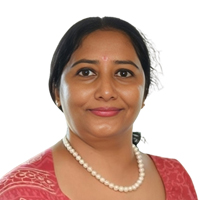
Founder and Managing Partner, Nectar Fresh
Director, CSIR-CMERI, Durgapur
Director, CSIR-NIIST, Thiruvananthapuram

Himanshu Patel Chair Professor, Dept. of Biosciences and Bioengineering, IIT Bombay
Director, CMTI, Bengaluru
Founder, Grind Master Machines
President, Danfoss India
Senior Advisor to the President and Director on Ocean and Climate Policy
Woods Hole Oceanographic Institution (WHOI), USA
Associate Dean R&D Professor, IIT Bombay
MoES Chair Professor/Scientist Former Director, INCOIS
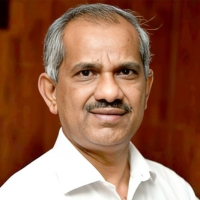
Former Secretary Ministry of Earth Sciences
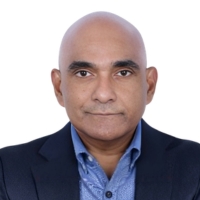
President, Deepsea Technologies Inc., USA
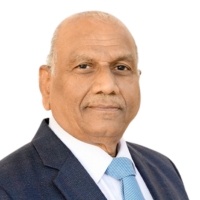
Chairman & Founder, Ananth Technologies
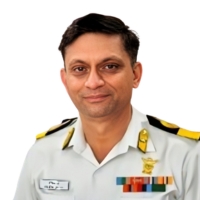
Directorate of Naval Oceanology and Meteorology, Naval Headquarters, Ministry of Defence
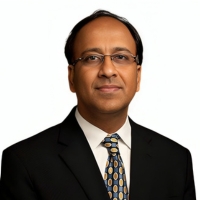
VP & MD, Micron India
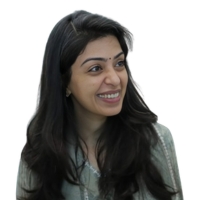
CEO, Bharat Semi
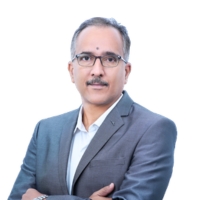
CEO, Netrasemi
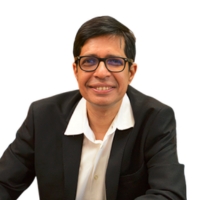
Director, IIT Madras
DG ECS, DRDO
 Sheena Rani.jpg)
DS & DG (MCC), DRDO
Head Govt Affairs, Qualcomm
AVP Fab Manufacturing, Tata Semicon
CMD, BEL
Founder & CEO, Ananant Systems
VC, BITS
Professor, Electrical Engg. & AI; Project Director, TiHAN, IIT Hyderabad
Chief Executive Officer, IHFC, IIT Delhi
Associate Professor, CSE; Yardi School of AI, IIT Delhi
Professor, Electrical Engg.; Chief Scientific Advisor, AIGGPA, IIT Indore
Raj Reddy Endowment Chair Prof.; Head, Robotics Research Centre, IIIT Hyderabad
Fellow, INAE & INSA; Board Member; former CTO, Microsoft India & South Asia
Founder & Chief Executive Officer, Ottonomy.io
Co-founder & Chief Executive Officer, xTerra Robotics
Former Member, Health NITI Aayog, New Delhi
Managing Director & CEO Immunoscript Life Science Private Limited., Pune
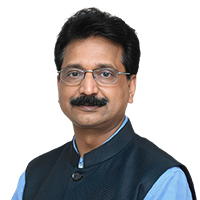
Director General, Central Council for Research in Ayurvedic Sciences (CCRAS), Janakpuri, New Delhi

Associate Professor, Radio-Diagnosis(Oncoradiology) AIIMS, New Delhi
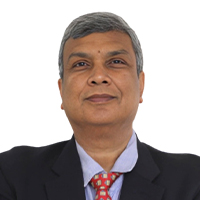
Dean, BioSciences and Health Research, Trivedi School of Biosciences Head, Koita Center for Digital Health, Ashoka University
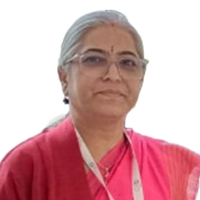
Scientist-G and Professor, CSIR-Institute of Genomics and Integrative Biology (CSIR-IGIB), New Delhi
.jpg)
Prof. & Head, Department of Kaumarabhritya, Ayurveda College, Kottakkal, Malappuram, Kerala
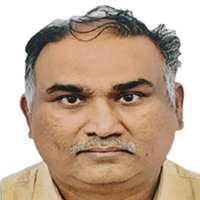
Chief Scientific Officer, Immuneel Therapeutics Private Limited, Bangalore
Senior Professor, Department of Haematology, Christian Medical College (CMC), Vellore, Tamil Nadu
Joint Drugs Controller (India), Central Drugs Standard Control Organisation (CDSCO), Ministry of Health and Family
Former Vice-Chancellor and Professor of Physics, Ashoka University
CEO, Skyroot Aerospace

AAKA Space
Project Director, Bhartiya Space Station, URSC, ISRO
Director, HSFC, ISRO
Associate Professor
Director, Technical Directorate, INSPACe
CTO, CENTUM, Bengaluru